

Blog
How Wide Are Shipping Containers

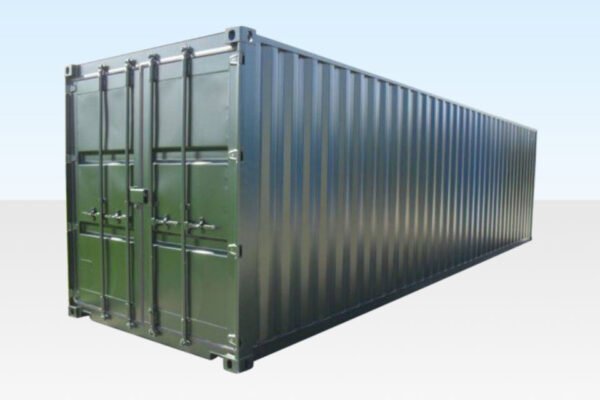
How Wide Are Shipping Containers? Complete Guide to Shipping Container Widths and Dimensions
If you’re planning to purchase a shipping container for storage, transportation, construction, or a container home project, understanding its dimensions is essential. One of the most common questions buyers ask is: How wide are shipping containers?
Most standard shipping containers are 8 feet wide (2.44 meters) on the outside, regardless of whether they are 10ft, 20ft, 40ft, or 45ft long.
However, the interior width is slightly smaller because of the container’s steel walls, structural framing, and construction materials.
In this comprehensive guide, we’ll explain standard shipping container widths, compare different container sizes, discuss interior and exterior measurements, and help you choose the right container for your needs.
How Wide Is a Standard Shipping Container?
A standard ISO shipping container measures 8 feet (96 inches or 2.44 meters) wide externally.
This width is consistent across most standard shipping containers used worldwide.
The interior width of a typical dry cargo container is approximately 7 feet 8 inches (2.35 meters), although exact measurements vary slightly depending on the manufacturer and container model.
Here’s a quick comparison:
| Container Type | Exterior Width | Approx. Interior Width |
|---|---|---|
| 10ft Shipping Container | 8 ft | 7 ft 8 in |
| 20ft Shipping Container | 8 ft | 7 ft 8 in |
| 40ft Shipping Container | 8 ft | 7 ft 8 in |
| 40ft High Cube Container | 8 ft | 7 ft 8 in |
| 45ft High Cube Container | 8 ft | 7 ft 8 in |
These dimensions apply to typical ISO-width containers. Specialized and custom-built containers may have different measurements.
1. How Wide Is a 10ft Shipping Container?

A 10ft shipping container typically measures 8 feet wide externally, making it a practical choice for small storage spaces.
Standard 10ft shipping container dimensions:
| Measurement | Approximate Size |
|---|---|
| Exterior Length | 10 ft |
| Exterior Width | 8 ft |
| Exterior Height | 8 ft 6 in |
| Interior Width | 7 ft 8 in |
Ten-foot containers are popular for residential storage, construction equipment, garden tools, small business inventory, and locations where space is limited.
Because many 10ft containers are manufactured or modified specifically for storage rather than international shipping, their exact dimensions can vary.
2. How Wide Is a 20ft Shipping Container?

A standard 20ft shipping container is 8 feet wide externally and approximately 7 feet 8 inches wide internally.
It is one of the most widely used container sizes for storage and international transportation.
Standard 20ft Shipping Container Dimensions
| Measurement | Approximate Size |
|---|---|
| Exterior Length | 20 ft |
| Exterior Width | 8 ft |
| Exterior Height | 8 ft 6 in |
| Interior Length | 19 ft 4 in |
| Interior Width | 7 ft 8 in |
| Interior Height | 7 ft 10 in |
A 20ft shipping container provides approximately 150 square feet of usable interior floor space, depending on its exact dimensions.
What Can Fit Inside a 20ft Shipping Container?
A 20ft container can accommodate a variety of household and commercial items, including furniture, appliances, boxed inventory, construction tools, and business equipment.
It is an excellent option for customers who need secure storage without requiring the additional length of a 40ft container.
If you’re looking for a versatile storage solution in New York, explore the available container sizes at Brooklyn Container Yard.
3. How Wide Is a 40ft Shipping Container?

A standard 40ft shipping container measures 8 feet wide externally, just like a 20ft container.
The primary difference is its length, which provides approximately twice the storage capacity by floor area.
Standard 40ft Shipping Container Dimensions
| Measurement | Approximate Size |
|---|---|
| Exterior Length | 40 ft |
| Exterior Width | 8 ft |
| Exterior Height | 8 ft 6 in |
| Interior Length | 39 ft 5 in |
| Interior Width | 7 ft 8 in |
| Interior Height | 7 ft 10 in |
A 40ft shipping container offers approximately 300 square feet of usable interior floor space.
What Is a 40ft Container Best Used For?
Forty-foot containers are commonly used for large-scale commercial storage, construction materials, furniture storage, industrial equipment, and container home projects.
Their additional length makes them particularly useful for businesses requiring more storage capacity without increasing the container’s width.
4. How Wide Is a High Cube Shipping Container?

A high cube shipping container has the same standard exterior width as a regular shipping container: 8 feet.
The main difference is its height.
A standard shipping container is 8 feet 6 inches tall, while a high cube container is 9 feet 6 inches tall.
Standard vs. High Cube Shipping Container Dimensions
| Measurement | Standard 40ft | 40ft High Cube |
|---|---|---|
| Exterior Length | 40 ft | 40 ft |
| Exterior Width | 8 ft | 8 ft |
| Exterior Height | 8 ft 6 in | 9 ft 6 in |
| Interior Width | Approx. 7 ft 8 in | Approx. 7 ft 8 in |
| Interior Height | Approx. 7 ft 10 in | Approx. 8 ft 10 in |
High cube containers are ideal for customers who need additional vertical storage space.
They are also popular for container home conversions because the extra interior height allows more room for insulation, ceilings, and utilities.
5. What Is the Interior Width of a Shipping Container?
Although a standard shipping container is 8 feet wide externally, its interior width is approximately 7 feet 8 inches.
The difference comes from the steel walls, corrugation, and structural components.
This distinction is important when planning to store wide equipment, furniture, pallets, or machinery.
For example, an item measuring exactly 8 feet wide will not fit inside a standard container because the interior is narrower.
You must also account for the width of the door opening, which can be slightly narrower than the internal cargo space.
Important: Always confirm the actual interior and door-opening dimensions before purchasing a container for oversized equipment.
6. How Wide Are Shipping Container Doors?

Standard shipping containers generally have double cargo doors at one end.
For typical 20ft and 40ft dry cargo containers, the door opening measures approximately:
-
Door opening width: 7 feet 8 inches (2.34 meters)
-
Door opening height: 7 feet 5 inches (2.28 meters)
High cube containers typically provide a taller door opening of approximately 8 feet 5 inches.
The exact dimensions may vary by manufacturer.
If you’re planning to load forklifts, motorcycles, machinery, or large furniture, checking the door opening is just as important as checking the interior width.
7. Are All Shipping Containers 8 Feet Wide?
No. While 8 feet is the standard exterior width for most ISO dry freight containers, specialized shipping containers can have different widths.
Standard ISO Containers
These generally measure 8 feet wide and are used for international freight transportation and general storage.
Pallet-Wide Containers
Pallet-wide containers are designed to accommodate certain pallet configurations more efficiently. They can measure approximately 8 feet 2 inches to 8 feet 2.5 inches wide externally, depending on the model.
Custom Storage Containers
Some storage containers are manufactured with nonstandard widths for specific applications.
Modified Shipping Containers
Containers converted into offices, workshops, homes, or retail spaces may have altered internal dimensions because of insulation, framing, and wall finishes.
For this reason, buyers should always request exact specifications before placing an order.
8. How Much Space Do You Need for a Shipping Container?
When purchasing a shipping container, the container’s physical width is only one part of the space requirement.
You also need enough room for delivery, placement, door access, and maintenance.
A standard shipping container may be 8 feet wide, but that doesn’t mean an 8-foot-wide space is sufficient for installation.
Additional clearance may be necessary for delivery vehicles, unloading equipment, and safe access.
Space Planning Considerations
Container placement: The ground should be stable, level, and suitable for supporting the container and its contents.
Door clearance: Leave sufficient room at the door end to open both cargo doors and load or unload items.
Delivery access: Trucks need adequate clearance to reach the installation area.
Side clearance: Additional space may be needed for inspection, ventilation, and maintenance.
Overhead clearance: Watch for electrical wires, tree branches, bridges, and other obstructions.
For customers in Brooklyn and other parts of New York City, narrow streets, parking restrictions, and limited property access can make delivery planning especially important.
Before ordering, discuss the site dimensions and unloading requirements with your container supplier.
9. Can Two Shipping Containers Fit Side by Side?
Yes. Two standard shipping containers placed side by side have a combined exterior width of approximately 16 feet, excluding any gap between them.
This configuration is popular for container homes, workshops, commercial storage facilities, and modular buildings.
For example:
| Configuration | Combined Nominal Width |
|---|---|
| One standard container | 8 ft |
| Two containers side by side | 16 ft |
| Three containers side by side | 24 ft |
| Four containers side by side | 32 ft |
These figures assume the containers are directly adjacent, without spacing.
If you’re planning a shipping container home, removing or modifying side walls to create a larger interior space requires professional structural assessment and reinforcement.
10. How Wide Are Shipping Containers for Homes?
Shipping containers used for residential construction generally retain the same 8-foot exterior width as standard cargo containers.
However, the finished interior width becomes smaller after adding insulation, framing, and wall finishes.
For example, if a container has an unfinished interior width of approximately 7 feet 8 inches and the conversion adds 4 inches of wall assembly on each side, the finished width would be approximately 7 feet.
This is why careful space planning is essential when designing a container home.
Many homeowners combine two or more containers to create larger living areas, kitchens, bedrooms, and open-plan layouts.
High cube containers are also frequently preferred because their extra height provides more flexibility for residential finishing.
11. What Shipping Container Size Should You Buy?
Choosing the right container depends on your storage requirements, available space, budget, and intended use.
| Container Size | Best For |
|---|---|
| 10ft Container | Small storage areas and limited spaces |
| 20ft Container | Household storage and small businesses |
| 40ft Container | Large storage projects and commercial inventory |
| 40ft High Cube | Taller equipment and container home projects |
| 45ft High Cube | Extra-long cargo and larger storage needs |
If you’re unsure which size to choose, start by measuring the largest items you plan to store and checking the available delivery space.
Remember that the interior dimensions are smaller than the exterior measurements.
Frequently Asked Questions About Shipping Container Width
How wide is a shipping container in feet?
Most standard shipping containers are 8 feet wide externally. This applies to typical 20ft, 40ft, and 40ft high cube ISO containers.
How wide is a shipping container in inches?
A standard shipping container measures 96 inches wide externally.
How wide is a shipping container in meters?
The standard exterior width is approximately 2.44 meters, or 2,438 millimeters.
How wide is a 20ft shipping container?
A standard 20ft shipping container is 8 feet wide externally and approximately 7 feet 8 inches wide internally.
How wide is a 40ft shipping container?
A standard 40ft shipping container measures 8 feet wide externally, with an interior width of approximately 7 feet 8 inches.
Are high cube containers wider than standard containers?
No. High cube containers are generally the same width as standard containers. They are taller, providing an additional foot of exterior height.
Can a car fit inside a shipping container?
Many passenger cars can fit inside standard shipping containers, depending on their dimensions. However, you must consider door-opening width, loading clearance, vehicle height, and safe securing methods.
How wide is a shipping container door?
The cargo door opening on a typical standard shipping container is approximately 7 feet 8 inches wide.
Are shipping containers wide enough to live in?
Yes, shipping containers can be converted into living spaces, but their narrow interiors require careful design. Combining containers can create wider residential layouts, subject to engineering and building approvals.
Buy Shipping Containers in Brooklyn, New York
Looking for reliable shipping containers for storage, commercial use, or a construction project?
At Brooklyn Container Yard, customers can explore shipping container options for different storage and project requirements.
Whether you’re searching for a compact 10ft container, a versatile 20ft unit, or a spacious 40ft high cube container, selecting the correct dimensions is essential.
Understanding shipping container widths helps you avoid costly mistakes and choose a container that fits your available space.
Visit Brooklyn Container Yard to explore shipping container options and inquire about availability, pricing, and delivery in New York.
Final Thoughts: How Wide Are Shipping Containers?
So, how wide are shipping containers?
The answer is simple: most standard shipping containers are 8 feet wide externally and approximately 7 feet 8 inches wide internally.
Whether you choose a 20ft, 40ft, or high cube container, the standard width generally remains the same.
The most important differences between these container types are their length, height, and storage capacity.
Before purchasing, always confirm the exact dimensions, door-opening measurements, and delivery requirements to ensure the container meets your needs.
